
Words can do something pictures can’t. They can convey ideas, quotes, and messages. Artists and designers use different styles of writing, like fancy handwriting, calligraphy, and typography, to make these words meaningful.
Imagine monks sitting in a quiet room, writing holy words by candlelight on old paper. They carefully made the first letter and the first word of each new chapter look special by making them bigger, colorful, and beautifully designed.
When people started using printing machines, they borrowed these ideas. They organized their pages with neat paragraphs. You could tell where a new paragraph began because of extra spaces and fancy first letters. The art of designing how words and letters looked developed as they found new ways to print and write using materials like wood, metal, and ink.
As materials evolved, so did the rules for how words and letters should be shaped and read. It became super important to make sure that what was written was easy to understand. The way words looked, their tone, and their meaning all had to work together to make sure readers got the message.

Typography in tattoos is an art that marries the power of words with the visual appeal of design. Unlike other forms of typography found in print or digital mediums, tattoo typography requires a deep understanding of both aesthetics and the nuances of human skin as a canvas. The choice of font, size, spacing, and layout can transform a simple quote or a single word into a profound piece of personal expression. Additionally, it demands precision from the tattoo artist. Mastery is also required, as letters and characters need to be rendered with clarity in mind. Longevity is a key consideration in this artistic process. As skin ages and changes, the typographical tattoo must still retain its readability and beauty. Thus, typography in tattoos is not just about writing on skin. It’s about engraving a story, belief, or identity that withstands the test of time.
Graphic designers, typographers, and calligraphers have been known to obsess over the minutia of the letter and word design. Both the readability of the words and the mood or tone of the typography are critical for the writing to communicate its intentions accurately. Typography and calligraphy in tattoos, however, is a new form of art and graphic design. Tattoos made of writing are not, or are not only, intended to communicate and to be read by others.
Tattoos serve as our war paint and armor, shields and anchors. They offer both protection and identity, acting as a form of communication that truly belongs to us. Unlike other art forms detached from our bodies, tattoos hold a unique and personal significance. The intimate nature of written communication that is part of our bodies means the style and the art of forming letters are critical for the communication, and the tattoo, to succeed.
When considering a tattoo that is partly or completely composed of wording, such as a motto or quote that has personal meaning, considerations for the design include how private the message needs to be and who should be able to read it. Considerations for the tattoo artist include the mood, tone, colors, and lines of the message. Additionally, they must factor in the space on the body for the design and anticipate how it will change with time. Unlike a book, skin is alive, and it covers bone and muscle, all of which age and weather with the passing years. A good tattoo integrates design elements for long-term readability and meaning. This ensures the tattoo maintains its original significance over time.

Many tattoo artists freestyle lettering while working with the information regarding tone, mood, and message. Typography from a computer font was not designed to wrap around the curves of a biceps muscle or move across a shoulder. The living canvas of skin is a different medium than paper.
Mood and tone in a written message can be shown through design elements like color, the thickness and blockiness of letters, design elements like spikes, serifs, and angles; how close the letters are to each other, all capitals or all lowercase letters, and other elements of the whole design such as an image. These elements also make the wording less or more able to be read by someone else, though this may not be as significant a goal as typography in a book or broadside.
If the meaning and message of the tattoo are personal, and part of personal iconography, the only person who needs to understand the lettering is the person whose skin is carrying the message. If the goal is to communicate ideas or beliefs to others, then readability is of prime concern, and freestyle lettering by a tattoo artist may be a much better option that translating fonts from a computer or letterpress. But like the typography on paper, wording with all capitals is difficult to read and comes across with the power of a shout. Wording with all lowercase lettering seems self-effacing and unobtrusive.
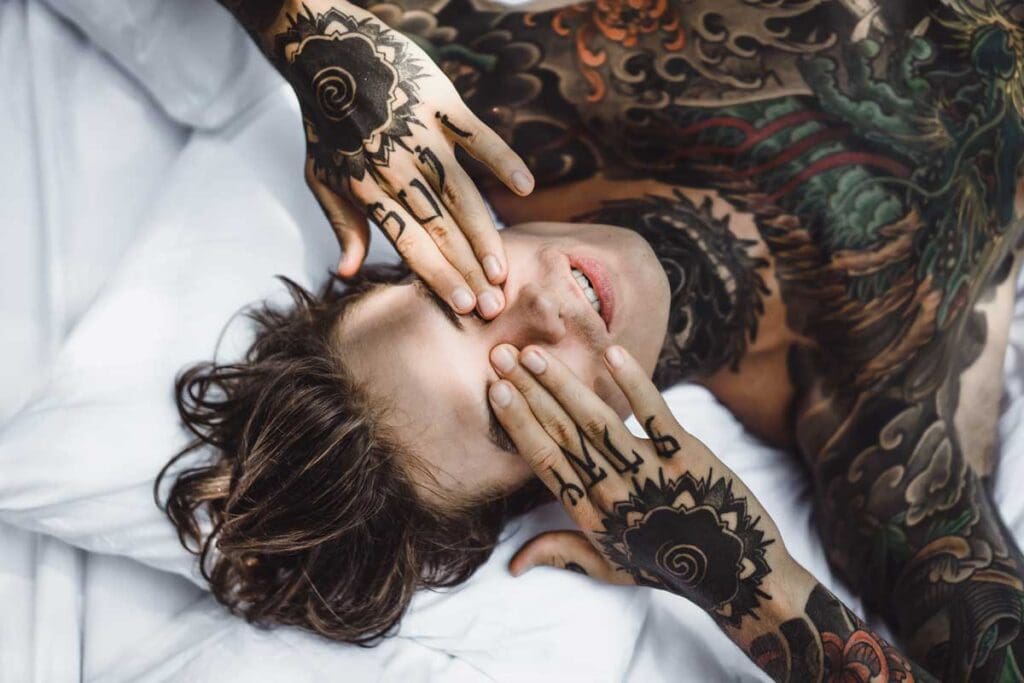
Letter design can be complex and powerful, with baroque structures such as are seen in illuminated manuscripts. It can also be very simple and clear, with a design that moves with the curves of a body. In all cases, though, lettering demands a great deal of precision by the tattoo artist, and a clear understanding of the way a tattoo changes over time. A tattoo artist who is skilled in typography or other word-forming arts, such as calligraphy or brushwork ideograms, should be able to discuss issues such as readability, changes over time, color choices and how they will affect the permanence of lettering, and the mood and tone of the letter choices.
Asemic writing is writing formed out of letters that do not belong to any known language. A type of abstract art, asemic writing can free word-forming, typography, and freestyle calligraphy from the constraints of meaning and communication. For those who particularly enjoy the subtle beauty and obscure nature of abstraction, asemic writing can suggest a personal and private iconography that is not interested in traditional communication with words, but in idea-based communication with design elements like line and form.
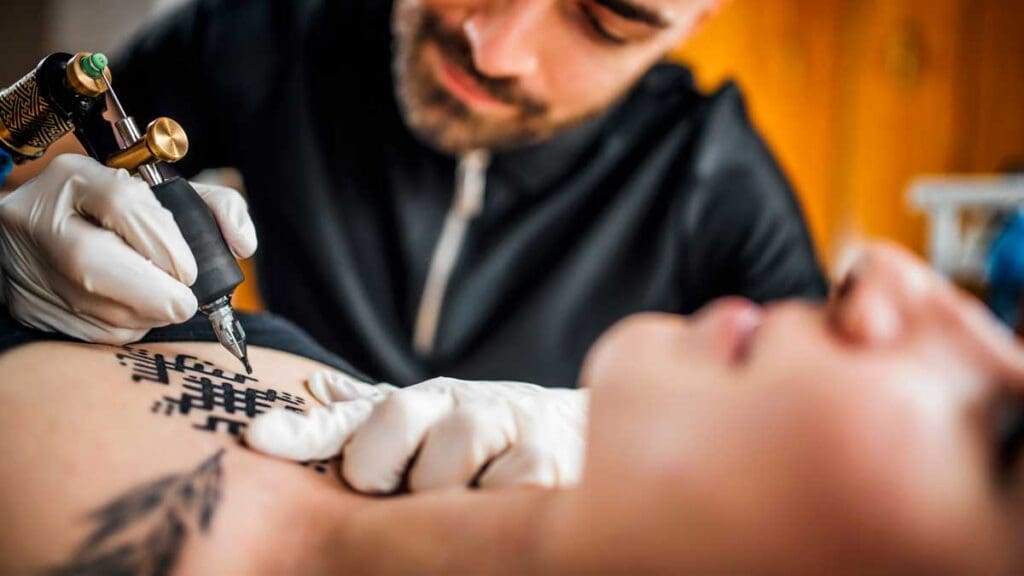
Language plays a significant role in the world of typography and written art. It can be a potent design element that reflects aspects like one’s heritage, family, ethnicity, and personal identity. To ensure that word-based tattoos in foreign languages or using different alphabets or symbols convey the intended message, it’s crucial for both the client and tattoo artist to conduct thorough research.
Even if the tattoo’s meaning is deeply personal and known only to the person wearing it, accuracy and clarity are essential for the tattoo to be considered successful. Typography serves as a powerful tool for conveying ideas, and when applied to tattoos, it helps individuals express their meanings, identities, and desires while also providing a form of personal symbolism through words. Tattoo typographers and calligraphers are rising to the challenge of working on living skin to meet their clients’ needs for meaningful, identity-affirming, and protective word-based tattoos.